This page is not a Top Pick list. It extends the same Decision Record language as the homepage:Tension → Choose / Skip → next action — so you reduce a wrong-clock buy, not chase a universal “best adaptogen.”
Decision Record
Is ashwagandha the right stress tool — or are you optimizing the wrong clock?
TensionChronic stress / evening wind-down vs daytime stamina under fatigue. Ashwagandha and rhodiola can both be “adaptogens”; picking the wrong clock is the expensive mistake.
Form / Label
Root extract labeling (often KSM-66 / Sensoril called out), evening vs morning use pattern, and whether you’re already on thyroid-sensitive meds (check with a clinician — we don’t diagnose).
Evidence
Public stress-recovery purchaser signals + known trade-offs (anhedonia reports at high continuous doses; thyroid caution in community/clinical notes). Score trade-offs, not “ancient wisdom” claims.
Choose
Choose ashwagandha if the job is chronic load and evening downshift, and you can cycle or reassess mood flatness after consistent use.
Skip
Skip ashwagandha-first if you need daytime drive under fatigue — rhodiola fits that clock better. Also skip if you want a one-night sedative or ignore thyroid/medication constraints.
Value
Usually inexpensive per bottle; real cost is weeks of consistency plus wrong-clock opportunity cost if your goal was daytime stamina.
Both are discussed as adaptogens. Marketing often treats them as interchangeable stress helpers. The expensive mistake is picking the wrong clock — evening downshift vs daytime stamina under fatigue.
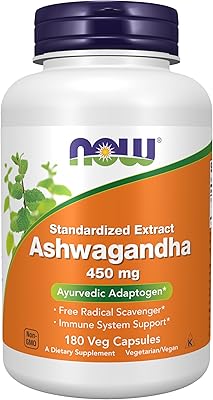
Ashwagandha (Withania somnifera) is commonly framed for chronic load and evening wind-down. Root-extract labels often call out standardized extracts (e.g. KSM-66 / Sensoril) — still read Supplement Facts, not the front claim alone.
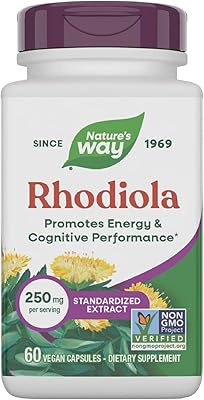
Rhodiola rosea is more often framed for mental stamina and afternoon crash. Taken late, some users report unwanted alertness — the opposite problem from a wind-down goal.
2. Decision boundary (choose / skip)
Choose ashwagandha if chronic load and evening downshift are the job, and you can reassess mood flatness after consistent use.
Skip ashwagandha-first if you need daytime drive under fatigue — rhodiola fits that clock better.
Skip “one-night sedative” framing for either herb — neither is a guaranteed sleep pill.
Try one clock at a time before stacking; stacking is optional, not a default “win.”
Evening / load-path option
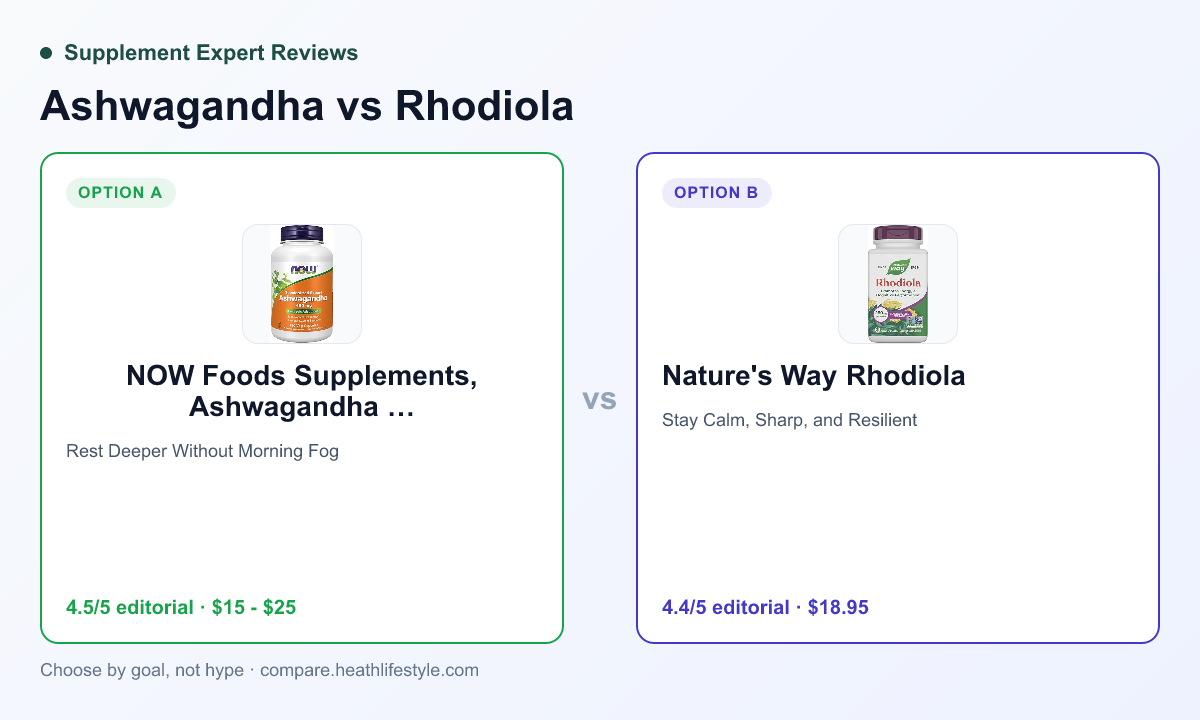
NOW Foods Supplements, Ashwagandha (Withania somnifera)
Which do users report as more calming — ashwagandha or rhodiola?
Community threads often describe ashwagandha as more relaxing with consistent use. Rhodiola is more often framed as daytime stamina under fatigue. Use the Choose/Skip boundary above — not star rankings.
Can I take ashwagandha and rhodiola together?
Some people experiment with both, but they target different clocks. Trying one at a time makes it easier to judge response. If you take thyroid, blood-pressure, or sedating medications, check with a clinician before stacking — this page does not prescribe combinations.
When do people usually take rhodiola vs ashwagandha?
Community patterns: rhodiola earlier in the day (late evening often avoided if alertness is an issue). Ashwagandha is often discussed for evening wind-down or split dosing. Timing mismatch is a common wrong-clock buy.
Why might ashwagandha stop feeling useful?
Some user reports mention flat mood or diminished effect after continuous high use. People sometimes reassess dose, take breaks, or switch clocks (e.g. rhodiola for daytime drive). Individual response varies — neither herb is a universal adaptogen.
Is ashwagandha better than rhodiola?
There is no universal better. Choose ashwagandha when chronic load / evening downshift is the job. Skip ashwagandha-first when daytime stamina under fatigue is the job — rhodiola fits that clock better.